Let's talk about the gap between consumer and enterprise sales cycles. Picture this: a consumer signs up for a product trial and decides in a week and a half, nice and clean. But move to enterprise sales, say you're selling a security platform and you'll spend over a year, hacking through layers of a sprawling buying committee. If you're lucky, you close it. Most of the time, you don't.
Now, most B2B nurture programs? They were built for that quick, two-week consumer sprint. But management expects them to survive the 14-month marathon that is enterprise buying. That's wishful thinking. The common drip campaigns, meaning those automated emails hitting inboxes on day 1, 3 and 7, work when someone's ready to buy before you even finish your coffee run. But with enterprise, where buying can span budget cycles, endure endless procurement talks and absorb new stakeholders seemingly every quarter, those rigid sequences fall flat. By the time your fourth email drops, the person who cared? They're on a new team. The budget's moved. You might not even make the shortlist.
So, what actually works? Behavioral email automation flips the model. Instead of lobbing emails on set days, you let triggers drive the conversation. Someone revisits your pricing page? A new stakeholder starts lurking around? Or the account goes dark for two months? Each of those moments should trigger an action or message, tailored to what's really happening rather than an arbitrary calendar date. Done right, automation shifts from a megaphone to a radar, since it listens first, then acts. That's how you build real engagement in a sales cycle that could last a year and a half.
Here's how you build that kind of nurture system, one that can survive executive churn, budget whiplash and the never-ending expansion of the buying committee. I'll lay out the key signals to watch, how you map them to smart triggers, ways to craft sequences that won't numb the buyer or go silent and most importantly, how to align sales and marketing so both agree on what “ready” looks like.
Why Static Drips Fail in Long Sales Cycles
Just about every marketing automation tool comes with the same playbook. Welcome email. Three or four nurture messages. A lead score. If the lead looks promising, hand it to sales. That's textbook marketing and it's fine, just not for complex deals. The churn of enterprise buying completely overwhelms this approach.
First, the buying committee is a moving target. A 2025 Gartner survey of 632 B2B buyers found that buying groups now range from five to 16 people across as many as four functions, and that's before you count how often the roster changes mid-deal. A scheduled drip does nothing to account for new players entering halfway through the process.
Second, buyers increasingly want to research alone. A 2026 Gartner sales survey of 646 B2B buyers found that 67% now prefer a rep-free buying experience. If your sequence is tied to an arbitrary clock and you're firing off emails while your buyer isn't even paying attention, it's wasted effort.
Third, static nurture leaves money on the table. Most marketing-qualified leads never convert to revenue, and inconsistent, one-size-fits-all follow-up is one of the most commonly cited reasons why. This isn't about blasting more emails. It's about missing the window when a buyer is actually receptive.
Behavior-based sequences fix these issues. They listen and respond instead of talking over the buyer's head.
The Four Signals Worth Your Attention
So, if you want buy-in from enterprise buyers, you need to pay attention to four categories of signals.
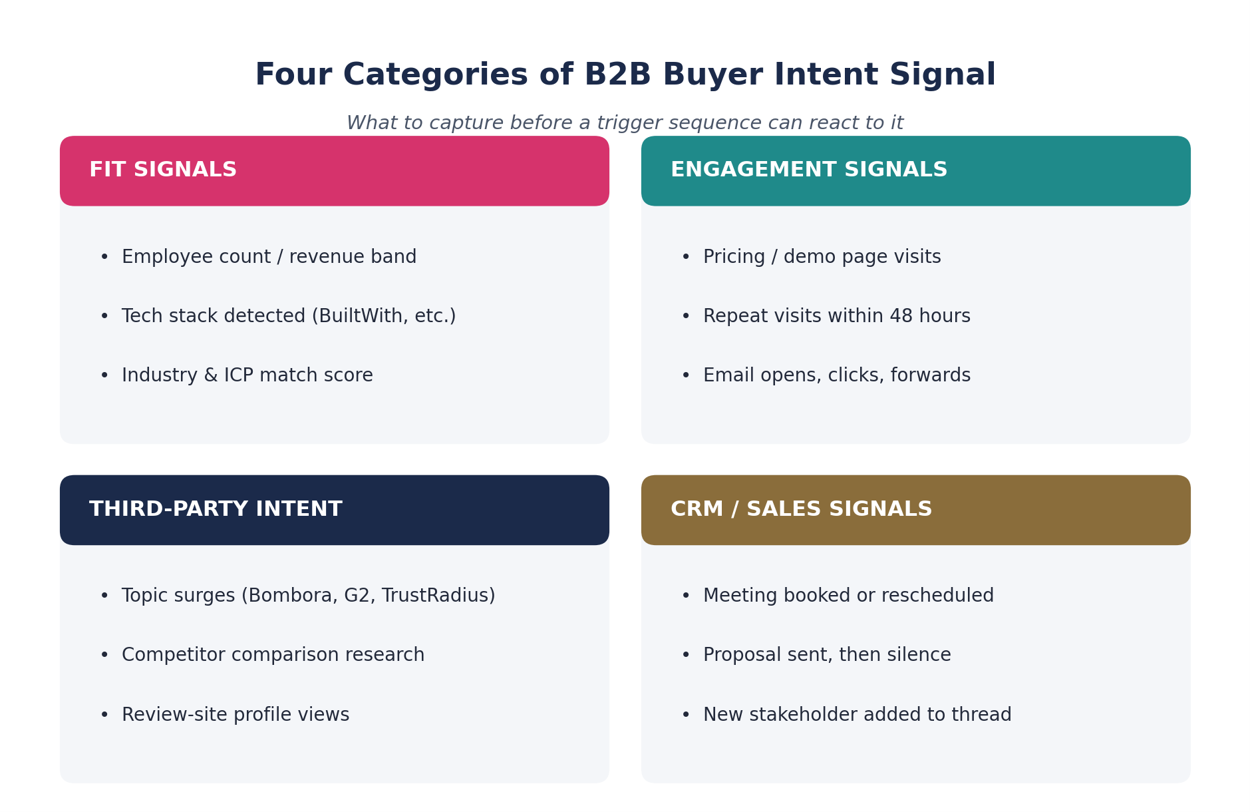
Figure 1. The four categories of buyer intent signal a trigger sequence draws on.
- Fit signals: This is your go/no-go check. Is the account even a real prospect? Are you seeing the right company size, revenue range, preferred tech stack? These help you decide who enters your nurture program, not what happens midway through.
- Engagement signals: The classic stuff like clicks, reviews, pricing page visits and importantly, email forwards to others. If someone shares your content with colleagues, a committee is forming. Most platforms track these, but too often, they sit around collecting dust.
- Third-party intent data: This is gold. Tools like Bombora or G2 reveal if an account is sniffing around for solutions like yours, maybe before you even know they exist. Spot the same signal firing more than once, and that's your cue to move before a competitor does. You don't want to miss out just because you're not watching.
- CRM and sales signals: The highest-value triggers come straight from the front lines. Was a meeting booked or cancelled? Did someone go silent after getting a proposal? Has a new name popped into the chain? These confirm real human engagement.
If your system only watches any one of these, you'll always be playing catch-up. The winning formula? Blend engagement and CRM data, and let fit and intent data dial in your confidence along the way.
How to Translate Signals into Smart Actions
Now for the hard part: what do you actually do when you see one of these signals? Most nurture programs default to a one-size-fits-all solution: “send another email.” That's lazy and leaves opportunity on the table.
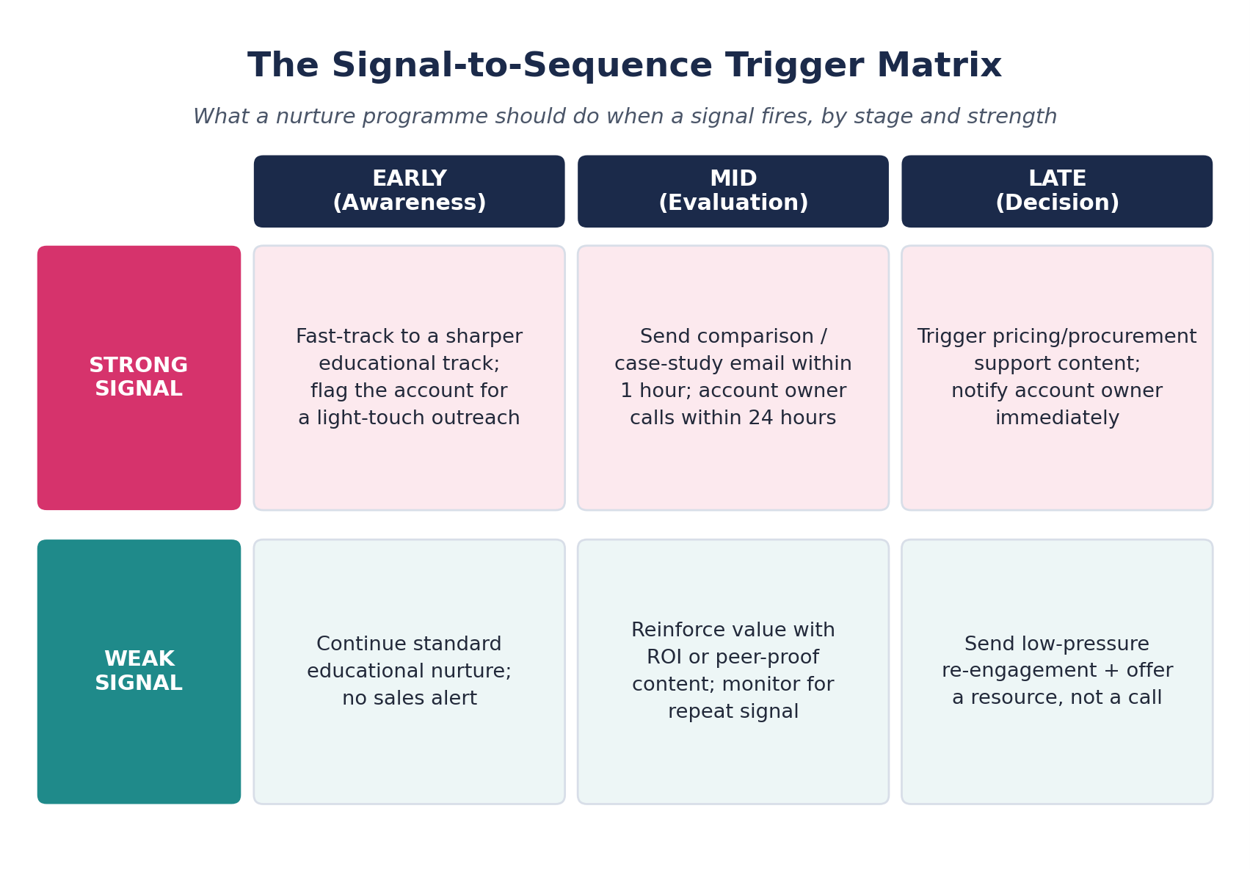
Figure 2. The signal-to-sequence trigger matrix: what a nurture program should do when a signal fires, by stage and strength.
A useful way to think about this is by mapping signal strength (weak or strong) and buying stage (early, mid, late). Early on, if someone's enthusiastic, meaning a stakeholder jumps into a webinar and comes back to your site days later, you put them on a deeper educational track. No sales calls yet; it's too soon and you risk alienating the committee. But later, if you notice repeat pricing-page visits deeper in the cycle, now is the time for a well-timed case study and a ping to the right sales rep. That's when you want sales to step in.
Late-stage signals should cut through any remaining friction, such as procurement tips or onboarding guides, delivered instantly. Miss these and you'll lose to a competitor who's paying closer attention.
Weak signals? Handle with care. Early triggers call for gentle nurture, a check-in. Midway, reinforce with value, but don't push. If these pop late in the journey, try a helpful resource or a light re-engagement touch. Don't go for the hard pitch.
What's strong versus weak really depends on your own sales cadence, team capacity and the cost of being wrong about a prospect's readiness. There's no one-size-fits-all, but you need a starting framework and you need to adjust as you go.
How to Build a Program That Lasts
It's one thing to capture signals and lay out triggers. To stay relevant in an 18-month buying journey, your nurture architecture needs a few more gears:
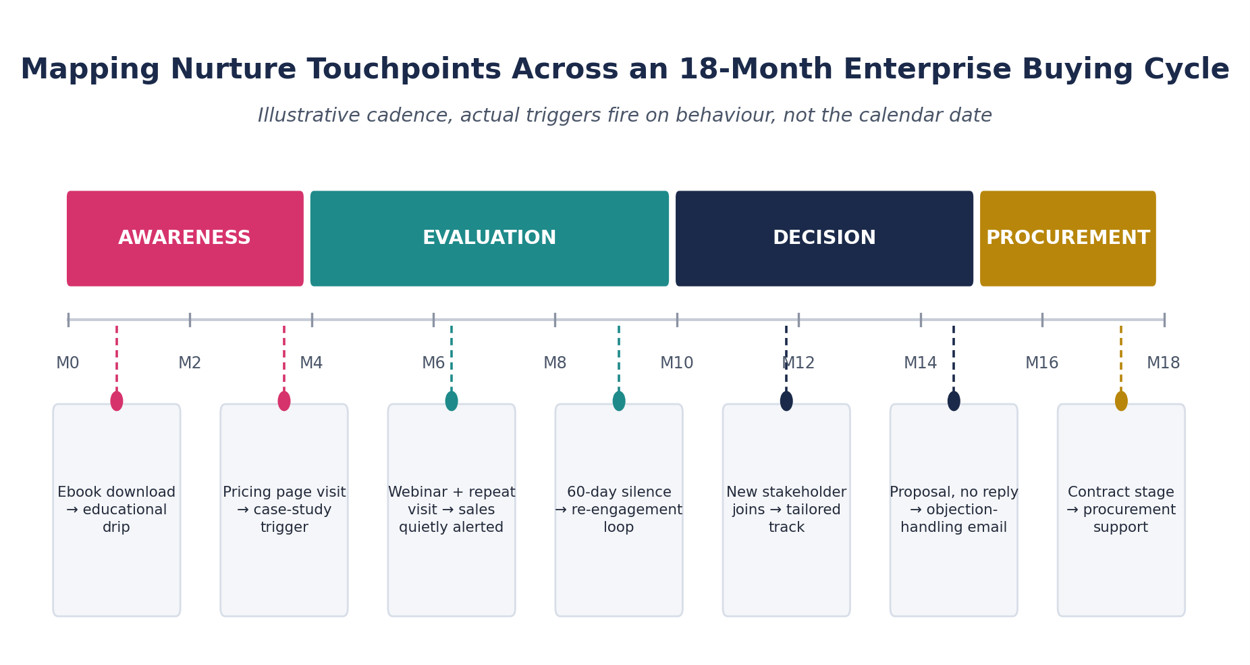
Figure 3. Illustrative trigger points across an 18-month enterprise buying cycle: actual timing follows behavior, not the calendar.
- Entry criteria: Use fit signals to gate who even gets in your nurture stream.
- Branching logic: Let engagement data decide what happens next. Did they click? Open? Ignore? Behind the scenes, this means you're running a decision tree, not a conveyor belt.
- Dormancy handling: Expect long silences; they're normal. After 60-90 days of quiet, flip to a re-engagement track, but change the tone. Don't repeat the same old pitch; speak to the reality that priorities change.
- Stakeholder expansion: When a new face joins, don't assume they're up to speed. Restart some of the sequence; personalize it. Each contact deserves messaging tailored to where they are.
Proven approach: per MarCloud Consulting's published case study, UK commercial property group Bruntwood used Salesforce and MarCloud to segment cold leads and trigger follow-ups based on actual engagement. This wasn't a shotgun approach; each email was tied to a buyer's interaction, whether they'd opened, clicked, or just visited but didn't convert. The campaign generated over £5 million in attributed revenue. That's the power of listening, not blasting.
Sales and Marketing: Still in Sync?
No nurture program works without clear agreement on what “ready” really means and how you track success.
First, your scoring model should decay over time. If a prospect stops engaging, their lead score should drop too, so don't clog up your sales pipeline passing cold accounts as “hot.” This keeps everyone honest.
Next, ditch vanity metrics. Open and click rates don't close deals. What matters is how quickly leads move from trigger to being real opportunities. Measure pipeline velocity, influenced pipeline (not just “touched”) and crucially, whether your triggers actually predict movement. If a late-stage trigger doesn't get results, recalibrate.
Clean data is mission-critical. Your martech stack should feed seamlessly into your CRM. If you're managing multiple product lines or regions, tools like a Customer Data Platform make this work. And don't forget email deliverability, because what's the point of a perfect trigger if your emails never land?
A quick example: per another MarCloud Consulting case study, IT compliance group Kirkpatrick Price used Salesforce Pardot to swap old calendar-based follow-ups with trigger-based ones. In a tough market, this approach kept open rates at 30% and drove $78,000 in new business, plus longer-term contracts. Matching timing to actual engagement made the difference.